From Training to Trade
The construction sector drives long-term economic expansion, relying on qualified, versatile tradespeople to deliver crucial infrastructure projects. As experienced professionals transition into retirement, the growing expertise shortage leaves companies searching for capable talent. In Indigenous communities nationwide, this imbalance presents unique challenges, as local major builds often rely on external labor rather than offering local jobs, skill-building, and economic growth.
Jessenia Rivera—a stationary engineer with the International Union of Operating Engineers and co-lead for NAWIC's Indigenous Industry Council—frames the issue clearly: "If you're not at the table, you're on the menu."
To secure its members' representation in the building trades, the Seneca Nation of Indians (SNI) launched a locally driven workforce strategy through its Training & Employment Resource Center (TERC). TERC is a vital resource for Seneca youth and adults, offering services that promote self-sufficiency, workforce readiness, and job creation.
At the center of this strategy is the Construction Technology Program (CTP), a paid, 25-week initiative that gives participants the foundational skills, certifications, and guidance they need to build lasting careers in construction. The goal is simple: increase the number of Seneca Nation members working on construction projects across Seneca territories. Instead of bringing in workers from around the country, the CTP prepares people from the community to build their own infrastructure. The result is a job-ready workforce that meets industry demands and fuels economic growth right where participants live.
What sets the CTP apart is its origin. Because the program is designed and led within the Seneca Nation, it carries something no outside initiative can easily replicate: community trust. That trust shapes every part of the program. By pairing culturally grounded training with practical, hands-on experience, the Seneca Nation is closing the construction skills gap and empowering its members to achieve long-term economic independence.

The aQuiRe Construction Academy app makes site training simple and presents content in a way that is easy to understand while still covering all essential topics. It makes tracking participants simple and ensures everyone on and off-site has access to the latest content.

Hybrid Training: Getting to Know aQuiRe Construction Academy
CAHill and aQuiRe Construction Academy provide heavy civil construction education with a mission to make trades-based training available to anyone, anywhere. Our programs create clear pathways into the construction trades through employer-aligned, skills-based instruction and industry-driven job readiness. We support workforce development through certified pre-apprenticeship programming, strong industry relationships, and training models designed to prepare participants for real job site success.
aQuiRe Construction Academy reflects that same mission through accelerated hybrid training built around hands-on instruction and digital learning. The model includes a large library of stackable micro-credential modules and training led by Subject Matter Experts. Participants gain certifications and skills in areas such as OSHA 10, Aerial Lift, Forklift, Work Zone Traffic Control and Flagger, Scaffolding, Generators and Pumps, Machine Operations and System Checks, Construction Math, and Construction Safety. In addition to technical training, the academy emphasizes dependability, industry awareness, and career empowerment.
Our approach is shaped by strong employer and union alignment. Through direct-entry relationships and broad workforce partnerships, we focus on preparing job-ready candidates who understand industry expectations and can move confidently into construction careers. This model supports both access and readiness, helping participants connect training to employment opportunities in a practical and measurable way.
The CTP pairs digital learning with in-person instruction. Participants build safety knowledge on the aQuiRe platform and then apply it through hands-on training, so they leave job-ready.
aQuiRe was built by construction professionals for the construction workforce. It gives every participant a strong safety foundation before they set foot on a jobsite.
- Safety-First Approach: Participants learn essential safety protocols up front, so safe habits are in place from day one.
- Interactive and Engaging: Short video lessons and quizzes replace paper forms and checklists, which keeps learners focused and improves retention.
- Simplified Compliance Tracking: Training progress is tracked digitally. Participants, instructors, and employers can see current safety data on and off site.
- One Year of Post-Graduation Access: Graduates keep the app for a full year to refresh their skills and stay current on safety standards.
- Mentor Network: Graduates join a network of mentors who guide and support them as they enter the workforce.
Hands-On Training and Certifications
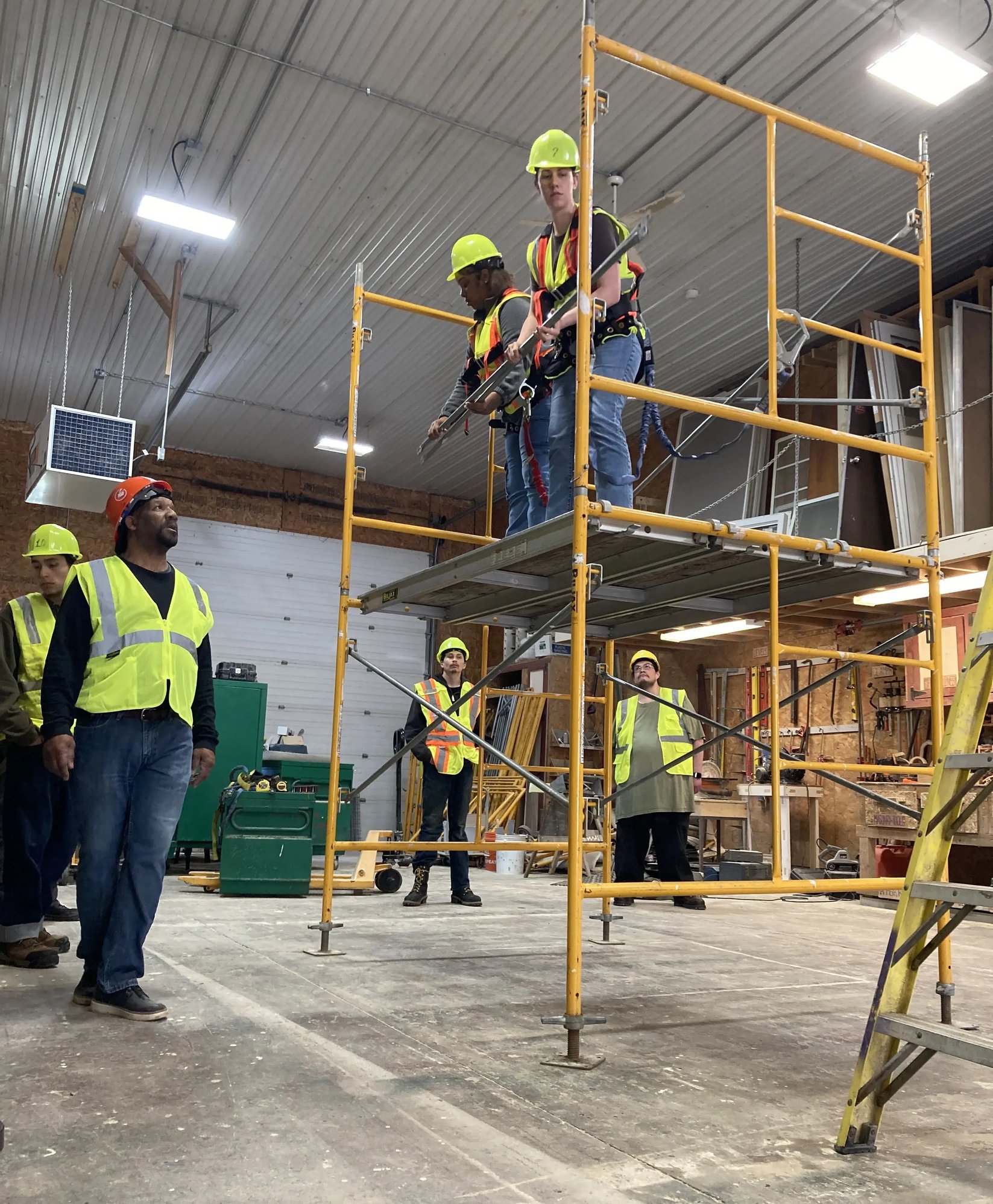
In partnership with CAHill, participants put their digital learning into practice through in-person instruction. They earn industry-recognized certifications, including:
- OSHA 10 Certification
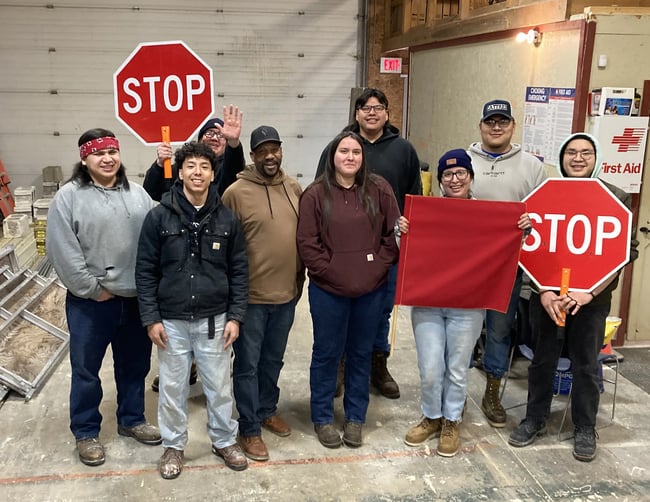
- Work Zone Traffic Control & Flagger Certification
- Aerial Lift Certification
- Forklift Certification
- Scaffold Safety and Installation
- Slips, Trips, and Falls
- Confined Space
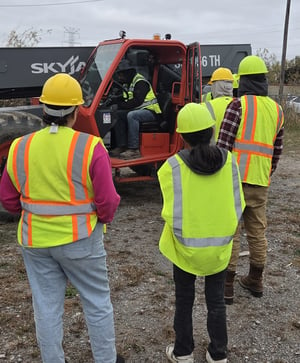
Together, these stackable credentials give graduates proof of their skills, a competitive edge with employers, and a clear path into heavy civil construction careers.
Graduates are encouraged to explore a range of career paths after completing the program, from applying to local union halls, such as carpenter and laborer unions, to pursuing jobs with employers in the surrounding community. This approach gives each graduate the flexibility to find the path that best fits their goals, with continued support through mentorship, training access, and job application assistance both within and beyond Seneca territories.
Training modules and resources are delivered through the aQuiRe Construction Academy app, which makes it easy for participants to access all the information they need anytime, anywhere.


Workforce Development: A Model for Real Partnership
Real progress means building a path forward together — through relationships, training, and jobs that last. Since 2021, the workforce development partnership between CAHill and the Seneca Nation of Indians has done exactly that through the Seneca Nation's Construction Training Program.
The results are measurable:
- 80+ Seneca Nation members trained through the CTP
- 4,600 aQuiRe Construction Academy modules completed by program graduates
- Standout participants: Elizabeth Peters recently graduated from the program and is proof of what’s possible when talent meets opportunity. Check out Elizabeth's interview.

Looking into the future
A Framework Worth Replicating
The CAHill–SNI partnership model is portable. It doesn’t depend on a single location or project; any Nation can replicate it to support its own workforce goals, local industry needs, and cultural priorities, creating a blueprint for workforce development across tribal communities.
- Invest in local talent. Train people who live near the project so economic benefits stay in the community while employers build a reliable pipeline of job-ready workers with a personal stake in the work.
- Pair community leadership with proven training expertise. The strongest workforce programs are shaped by both local leaders, who understand community needs, and training partners, who deliver the structure, instruction, and support to turn opportunity into outcomes.
- Equip workers with job-ready skills and recognized credentials. Quality, engaging training helps participants build real-world skills, earn industry-recognized certifications, and arrive prepared to contribute to contractors, union halls, and local projects that are actively hiring.
- Support retention and long-term growth. Hiring is only the start; mentorship, continued learning, and ongoing access to training help new workers stay on the job, expand their skills, and build lasting careers.
- Measure success by careers built, not just roles filled. The real impact of a workforce program is seen in long-term employment, advancement, and pathways to self-sufficiency.