When I set out to build the aQuiRe construction training app in 2017, I kept running into the same dusty artifact: a VHS tape from 1986. No joke. That tape was the go-to training tool for some construction crews. Outdated, uninspiring, and completely disconnected from how people learn today.
I founded CAHill TECH in Buffalo, New York, in 2019. I've spent every year since working to close the gap between the skills our industry needs and the opportunities available to the next generation. As a woman working in an industry that has historically been male-dominated, I've learned that credibility doesn't come from having all the answers. It comes from doing the work, listening to the people on the ground, and building solutions that make sense.
Our infrastructure needs are growing. The demand for skilled tradespeople is real. And the opportunity to create meaningful, family-sustaining career pathways is too important to ignore. But meeting that demand requires an approach that respects both how people learn and what the job actually requires.
This is what drives me. Bridging the skills gap. Opening doors. And creating opportunities for people who are ready to build something meaningful.
You Can't Build Tomorrow's Workforce with Yesterday's Tools
We have an entire generation of young people who have grown up with visual, interactive, on-demand content. They're accustomed to accessing information when they need it, in formats that are engaging and easy to navigate.
It's not that young people don't want to gear up and get dirty. It's that we shut down the bridge to learn what the skilled trades actually require. To build the future of construction, we need training that meets employers' expectations while also meeting the next generation where they are.
That's the premise behind aQuiRe Construction Academy.
Kinesthetic Learning: Where Technology Meets Real Skill
Technology alone was never going to be the full answer. But it can be a critical part of the solution.
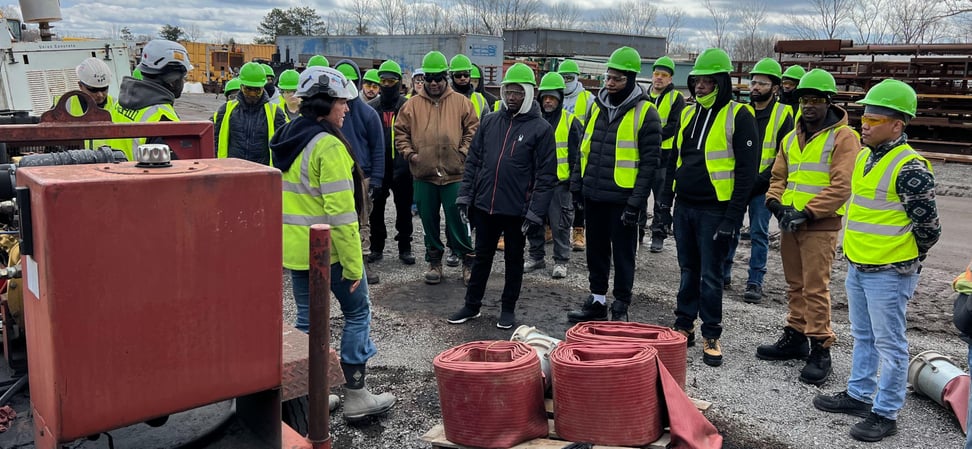
Here's what years of market research and on-the-ground experience have taught me: in construction, learning by doing is essential. That's kinesthetic learning: building skill through movement, repetition, and practice. In construction, it isn't just one learning style among many. It's how this work gets mastered.
This is exactly where that 1986 VHS tape fell short. Sitting in a trailer watching a grainy video asks you to absorb information passively, and passive learning doesn't build muscle memory. It doesn't teach your body the safe way to lift, brace, or position yourself before your brain has time to think it through. Confidence on a jobsite comes from doing a task correctly, then doing it again until it becomes second nature. The same goes for judgment, like spotting a hazard early, knowing when something feels off, or recognizing when to stop and ask. As seasoned workers retire and take decades of field knowledge with them, we can't afford training that skips this step.
Technology can make knowledge more accessible, help reinforce concepts, and allow trainees to learn at their own pace. What it can't replace is the muscle memory, judgment and confidence that come from actually doing the work.
The Hybrid Training Model
aQuiRe Construction Academy was built as a HYBRID model, not a screen-only solution. The aQuiRe app has 300+ video modules, developed with master trainers who have spent their careers in the field. The modules prepare your mind; hands-on instruction trains your hands. You learn the concept, check your understanding with a quiz, and then work with a trainer with real field knowledge to put what you learned into action.
The goal isn't to replace hands-on training. It's to make an element of training more accessible, effective, and connected to what happens on an actual jobsite.
Our aQuiRe graduates have an array of safety, site operations and machine knowledge and hands-on certifications to take with them on to a job site.
For employers and training partners, it means better visibility into learner progress, less administrative paperwork, and a more consistent approach to assessing knowledge and preparing people for the field.
Pathways from Survival Jobs to Sustainable Careers
 When I see people reaching for ambitious goals and meaningful opportunities, I'm reminded of what it means to imagine what’s next. If we're asking trainees to stretch toward their futures, shouldn't we be willing to stretch, too? We owe them real tools, real mentorship, and real pathways.
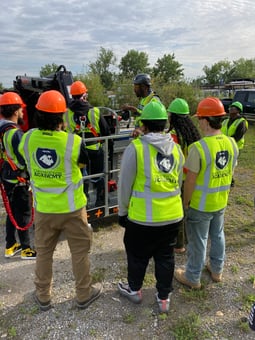
At CAHill, we use collaborative partnerships to bring aQuiRe Construction Academy to those who are eager to move from survival jobs into sustainable careers. The goal is to connect classroom or virtual learning with industry-informed training and hands-on experience, helping individuals build the foundational skills they need to achieve careers.
Strong partnerships are built when industry, education, and workforce development partners pursue a shared goal. Industry partners bring the field experience and the demand; Education partners bring structure; Workforce development and community organizations bring people and resources.
For the people we serve, that pathway changes everything. Construction offers family-sustaining wages and long-term advancement, often without the debt of a four-year degree. But opportunity only becomes real when someone helps open the door. Partnership is how we open it wider, for more people, in more communities.
And it's the kind of partnership we need to see more often.
The Future of Construction Is Something We Build Together
If you're an industry professional, a retiree with knowledge to share, an educator, a parent, or someone who believes the skilled trades deserve a modern approach to workforce development, I'd love to hear from you.
What's working in your community? Where are the gaps? What could we accomplish if we brought more of the right people together? Let’s talk.
Watch our partnership video to see our modern construction workforce training in practice:
The next generation is ready and eager—it's up to us to help create pathways for them.